How Telemetry Insights From Auto Racing Inform Training Regimens for Sprinters in Track and Field Programs
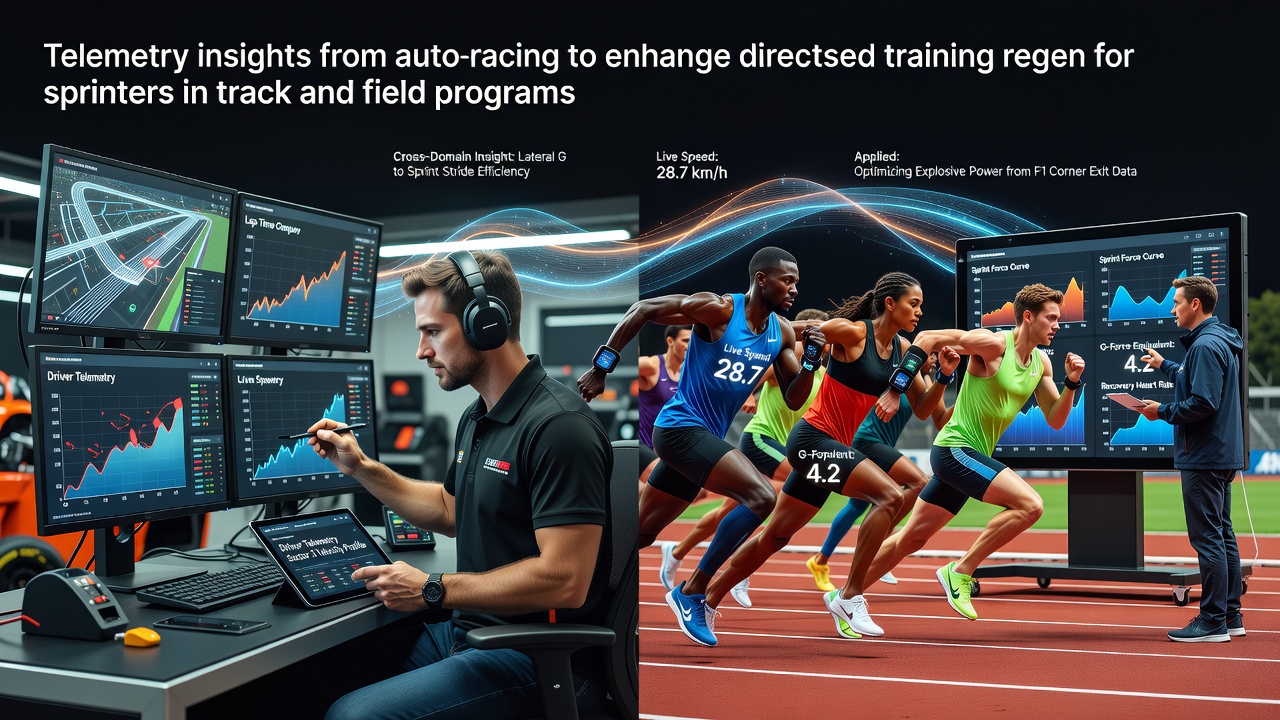
Auto racing teams have long relied on telemetry systems to capture thousands of data points per second from vehicles, including throttle application, brake pressure, lateral forces, and tire degradation patterns, while track and field programs now adapt similar sensor arrays to monitor sprinters during acceleration phases and top-end speed maintenance. These crossovers emerged as coaches sought precise metrics on force distribution and energy expenditure that traditional stopwatches could not provide. Research from biomechanics laboratories shows that Formula One-style data logging helps identify inefficiencies in stride mechanics that mirror the way engineers detect understeer or power loss in racing cars.
Core Telemetry Elements Borrowed from Motorsports
Engineers in auto racing collect continuous streams of information on vehicle dynamics through onboard computers, and athletics programs have begun mounting lightweight accelerometers and GPS units on athletes to record comparable variables such as ground reaction forces, step frequency, and horizontal velocity curves. Studies conducted at institutions across Europe indicate that sprinters exhibit measurable drops in force output after the first 30 meters that parallel tire wear curves observed during long stints on a circuit. Trainers therefore adjust interval sessions to replicate the controlled energy management strategies used in pit-stop planning, extending recovery windows between maximal efforts while maintaining high-intensity output.
Application to Sprint Acceleration and Deceleration
Launch control systems in racing cars optimize torque delivery to prevent wheel spin, and equivalent protocols now guide starting-block exits for 100-meter and 200-meter specialists. Data collected during national team camps reveals that athletes who receive immediate feedback on drive-leg extension angles improve their 0-to-10-meter split times by measurable margins, much like drivers refine throttle mapping after reviewing sector telemetry. In June 2026 several European federations reported expanded use of these synchronized sensor packages during combined training camps, allowing coaches to overlay sprint traces directly against archived race-car acceleration graphs for comparative analysis.
Monitoring Fatigue and Recovery Through Sensor Fusion
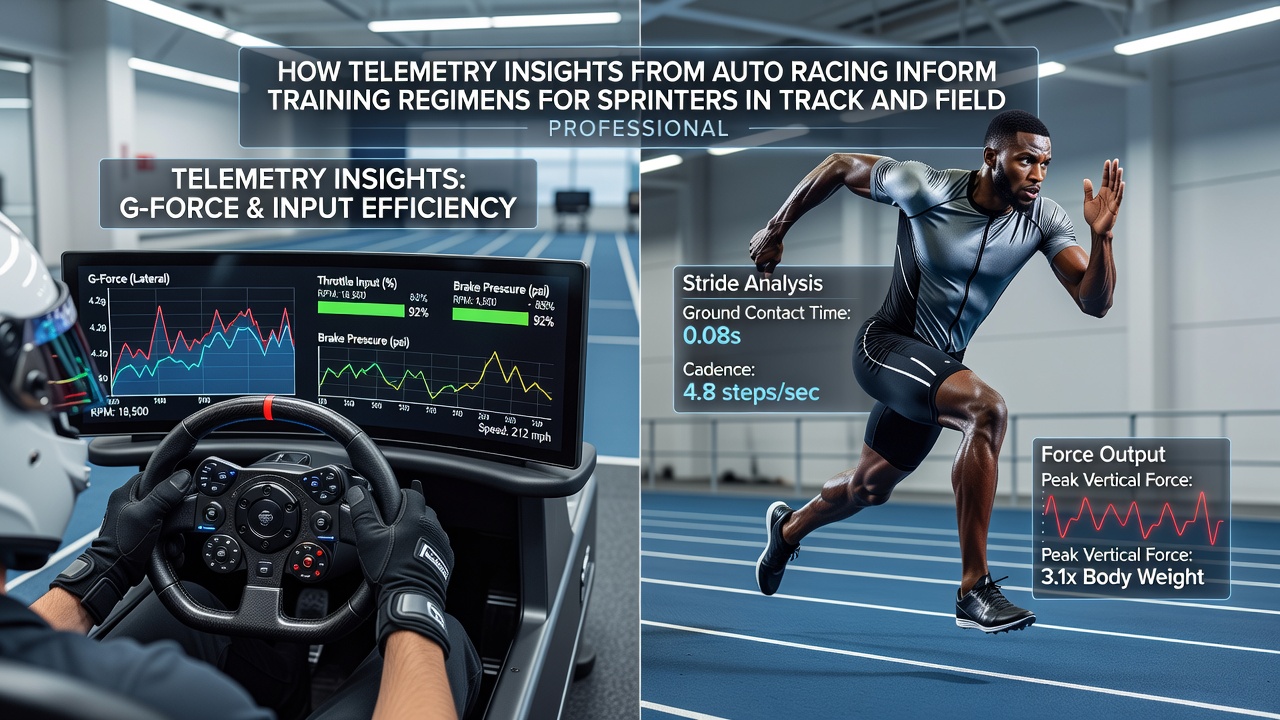
Tire-temperature monitoring in endurance races informs decisions on stint length, and the same principle applies when sports scientists track muscle-temperature and heart-rate variability in sprinters across repeated flying 30-meter efforts. Programs that integrate multi-sensor vests report clearer identification of when an athlete’s ground-contact time lengthens beyond optimal thresholds, prompting adjustments identical to those made when brake-disc temperatures exceed safe operating ranges. Observers note that these methods reduce overtraining incidents because workload prescriptions rest on objective thresholds rather than subjective perception alone.
Collaborations Between Racing Engineers and Athletics Staff
Technical staff from motorsport organizations have partnered with university research groups in Australia and North America to adapt data-visualization dashboards originally designed for pit walls. These platforms allow coaches to view real-time stride symmetry alongside historical benchmarks, enabling session-by-session modifications that mirror how race engineers alter suspension settings between practice runs. One documented project at a major Canadian sport institute demonstrated that sharing algorithms for lateral-force analysis improved cornering technique analogies used in curve-running drills for 400-meter athletes.
Data Integration in Modern Periodization Plans
Periodization models in track and field traditionally relied on volume and intensity percentages, yet telemetry-derived metrics now supply granular inputs such as peak power per stride and horizontal impulse values. Federations that adopted these inputs ahead of the 2024 Olympic cycle continued refining them through 2026, producing training blocks that emphasize micro-adjustments similar to those made during qualifying sessions. Evidence from longitudinal tracking shows athletes maintain higher consistency in their speed-endurance phases when daily plans incorporate telemetry alerts for asymmetry or excessive vertical oscillation.
Future Directions and Standardization Efforts
International governing bodies have begun exploring unified data protocols that would allow cross-sport comparison of acceleration signatures, drawing on frameworks already established by motorsport safety commissions. Researchers continue to validate whether braking-zone telemetry patterns can predict hamstring strain risk in the final 20 meters of a sprint, with preliminary findings expected in late 2026. Such developments hinge on secure data-sharing agreements that respect athlete privacy while preserving the analytical depth that has already transformed vehicle performance optimization.
Conclusion
Telemetry transfer from auto racing supplies track and field programs with objective, high-resolution measurements that refine acceleration mechanics, fatigue management, and periodization decisions for sprinters. Continued collaboration between engineering teams and sports-science departments sustains measurable gains in training precision, and ongoing standardization work promises broader application across elite programs worldwide.