Lateral Agility Transfers: How Tennis Court Movements Shape Soccer Defensive Tactics in Premier Competitions
Written by Katja Friedrich · Aug 19, 2026
Lateral Agility Transfers: How Tennis Court Movements Shape Soccer Defensive Tactics in Premier Competitions
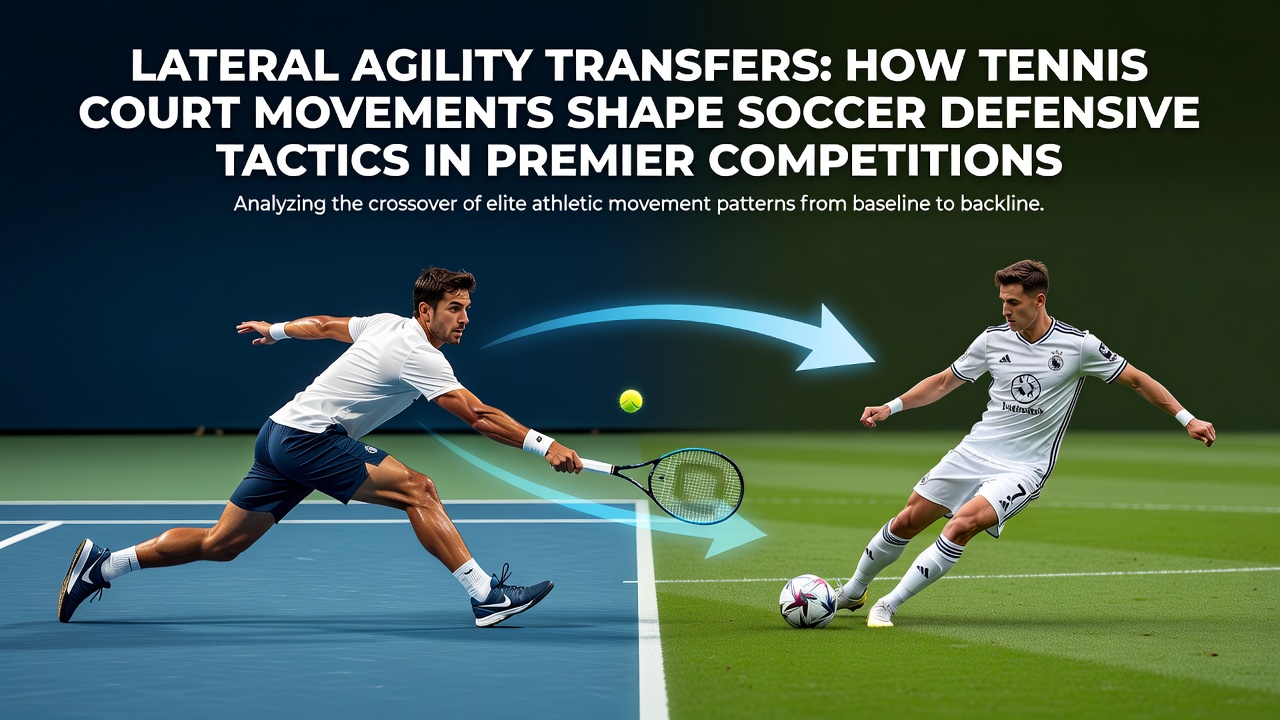
Coaches in top European soccer leagues have long drawn from racket sports to refine defensive positioning, and lateral agility stands out as one of the clearest areas where tennis court mechanics influence how defenders close space and maintain balance under pressure. The split step that tennis players use to initiate directional changes appears in modified form among soccer fullbacks who must react to wingers cutting inside, while the low center of gravity tennis players maintain during baseline rallies translates directly into the staggered stance defenders adopt when tracking overlapping runs. Data from performance analysis platforms used by Premier League clubs show that players who incorporate tennis-derived lateral drills record quicker recovery steps when opponents switch play across the pitch.
Core Elements of Tennis Lateral Movement
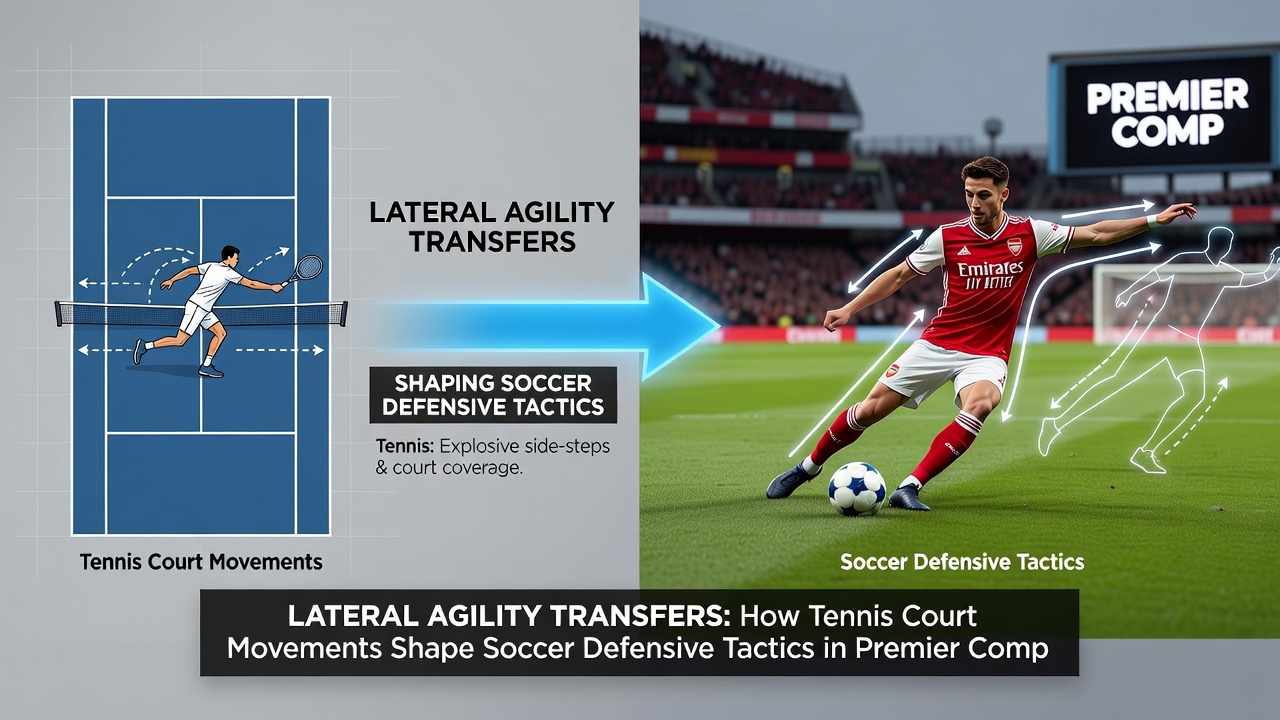
Tennis requires athletes to cover wide angles on a 78-foot court while keeping their racquet ready, which forces constant small adjustments in footwork that emphasize hip mobility and reactive balance rather than straight-line speed. The unit turn and crossover steps that allow a player to reach a wide forehand become the foundation for soccer defenders who must pivot to cover cutbacks inside the penalty area. Studies conducted by sports science departments at institutions such as the University of Queensland indicate that the eccentric loading patterns developed through repeated tennis side shuffles improve the ability to decelerate quickly, a skill that reduces the distance between defender and attacker during high-tempo transitions. Those same loading patterns appear in training logs from clubs that schedule dedicated lateral movement sessions twice weekly during pre-season blocks.
Transfer Mechanisms into Soccer Defensive Systems
Premier League defensive structures increasingly rely on collective pressing triggers that demand synchronized lateral shifts across the back line, and several clubs have adopted tennis court dimensions for small-sided games that force players to cover space without relying on forward momentum. The recovery slide used after a tennis player lunges for a volley mirrors the angled retreat defenders employ when an opponent plays a one-two around the corner, and video analysis from the 2025-26 campaign reveals measurable reductions in space conceded during such sequences among teams that emphasize these drills. Observers note that the timing of weight transfer from tennis groundstrokes carries over to the moment a center-back decides whether to step up or drop off when facing a striker on the shoulder.
Training Integration and Performance Data
Strength and conditioning staff at several Premier League academies combine tennis-specific ladder patterns with soccer ball work so defenders practice reading cues while executing the same hip rotation sequences they use on court. GPS and inertial measurement data collected during matches indicate that players who complete these hybrid sessions show improved lateral acceleration values in the 0-5 meter range, which correlates with higher success rates in tackles attempted from wide angles. One training methodology documented in applied sports research papers links the frequency of tennis-style shadow drills to lower instances of groin strain among fullbacks who cover large areas during set-piece defending. As the 2026-27 campaign preparations begin in August, multiple clubs have scheduled joint sessions with tennis coaches to refine these movement patterns ahead of the opening fixtures.
Case Examples from Current Competitions
Defenders who previously competed at junior tennis levels often display distinctive hip separation when jockeying opponents along the touchline, and performance analysts at clubs in both the English Premier League and Bundesliga have catalogued these patterns in match reports. The crossover step that prevents a tennis player from being pulled wide on a return of serve appears in the footwork of left-backs who must cover both the winger and the near-post space during crosses. Figures released by the European Club Association tracking physical metrics across five major leagues show that teams with higher lateral movement training volumes maintain tighter defensive lines in the final 15 minutes of matches, when fatigue typically reduces reactive agility. These trends continue to influence how scouts evaluate prospects transitioning from academy ranks into senior squads.
Biomechanical Overlaps and Measurement Tools
Force plate assessments conducted at high-performance centers reveal that peak horizontal ground reaction forces generated during tennis side lunges align closely with those recorded in soccer defensive slides, allowing practitioners to use similar loading thresholds across both sports. Wearable sensor data shared between tennis federations and soccer clubs has helped standardize protocols for monitoring hip adductor fatigue, which in turn informs recovery schedules during congested fixture periods. The reality is that these shared biomechanical demands have prompted several governing bodies to include multi-sport movement batteries in talent identification programs that span racket and invasion sports.
Conclusion
Cross-sport movement analysis continues to shape how defensive tactics evolve in elite soccer, with tennis-derived lateral agility providing a repeatable framework for improving reactive positioning and space management. Clubs that systematically integrate these elements report consistent gains in defensive metrics tracked across domestic and European competitions, while ongoing research refines the specific loading parameters that maximize transfer without increasing injury risk. The patterns observed in August 2026 pre-season testing suggest these approaches will remain central to tactical preparation in the seasons ahead.