Tactical Evolutions Triggered by Scoring Adjustments in Basketball and Tennis Professional Circuits
Written by Greta Jung · Aug 12, 2026
Tactical Evolutions Triggered by Scoring Adjustments in Basketball and Tennis Professional Circuits
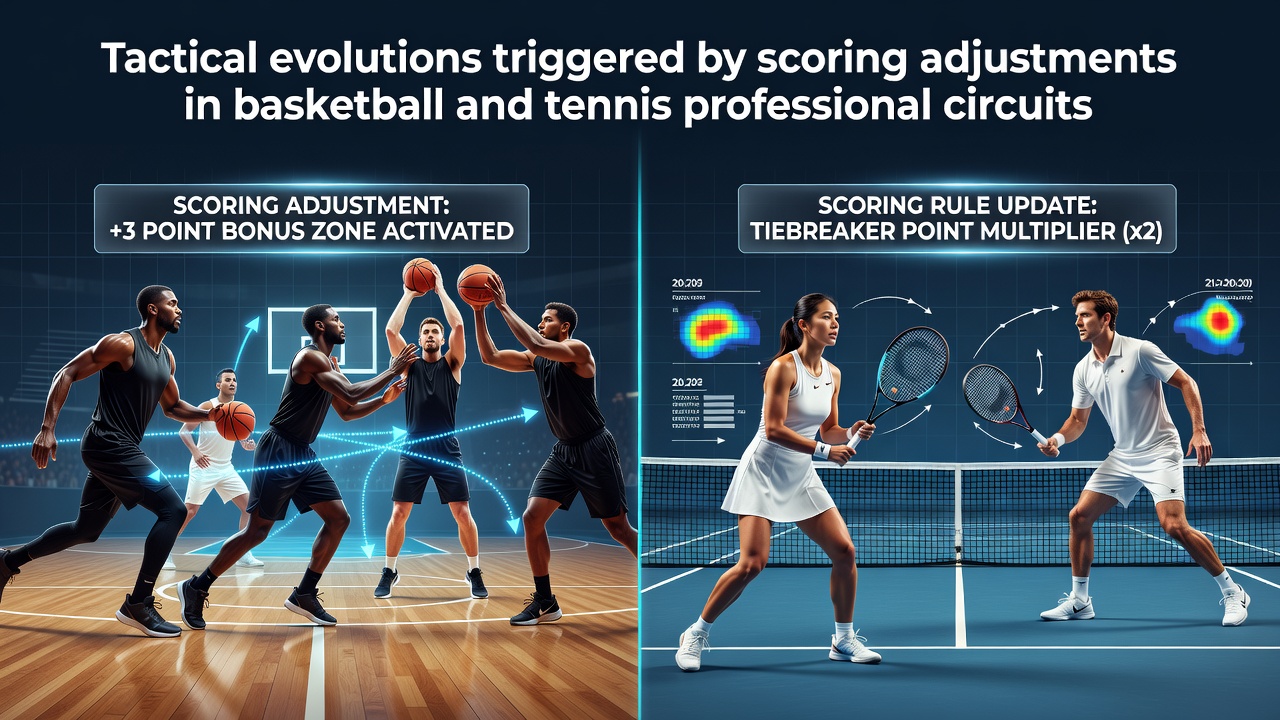
Scoring adjustments in professional basketball and tennis have prompted measurable shifts in team and player strategies across major circuits, with data from league records showing how rule tweaks alter spacing, shot selection, and match pacing. When the NBA introduced modifications to foul calls and three-point line enforcement in recent seasons, teams adjusted by increasing reliance on perimeter-oriented offenses that prioritize ball movement over isolation plays, while defensive schemes evolved to include more zone rotations and help defense commitments. These changes reflect direct responses documented in official play-by-play statistics, where three-point attempt rates rose in correlation with the adjusted foul thresholds.
Basketball Adjustments and Resulting Formations
Professional basketball circuits such as the NBA and FIBA-sanctioned events have implemented scoring-related modifications including alterations to goaltending interpretations and bonus foul accumulations, leading coaches to restructure lineups around stretch forwards and versatile guards capable of operating in wider court areas. Observers note that teams now deploy more small-ball configurations during late-game scenarios because the adjusted foul incentives reward quick transitions and open three-point looks rather than interior post-ups. Research from the NCAA Division I basketball rules archive indicates similar patterns in college-to-pro pipelines, where players trained under updated foul-drawing protocols carry those habits into professional ranks and influence set-piece designs.
Case studies from the 2024-2025 NBA season illustrate how defensive three-second violations prompted earlier help rotations, resulting in higher assist numbers on kick-out passes according to league tracking data. Teams that adapted fastest incorporated more off-ball screens and dribble handoffs to exploit the new spacing dynamics, while slower adapters saw measurable drops in effective field goal percentages during transition opportunities.
Tennis Scoring Modifications and Court Positioning
In professional tennis circuits governed by the ATP, WTA, and ITF frameworks, scoring adjustments such as expanded tiebreak formats in deciding sets and experimental no-ad scoring in doubles have driven players toward baseline dominance and reduced serve-volley frequencies on faster surfaces. Data compiled across Grand Slam events shows that longer tiebreak structures encourage extended rally construction, prompting adjustments in footwork patterns and shot selection that favor topspin consistency over aggressive net approaches. Those who've tracked match durations note that average point lengths increased following the 2022 introduction of the 10-point tiebreak in fifth sets at major tournaments, which in turn influenced training regimens focused on endurance and recovery between prolonged exchanges.
Players on the ATP Tour have responded by incorporating more drop-shot variations and angled groundstrokes to disrupt rhythm under the revised scoring windows, while WTA competitors demonstrate parallel adaptations through increased use of wide serves to set up cross-court patterns. These tactical refinements appear in aggregated statistics from official tour reports, where first-serve win percentages in tiebreak situations reflect the shift toward higher-percentage rally play rather than high-risk attacking tennis.
Cross-Sport Patterns in Adaptation Speed
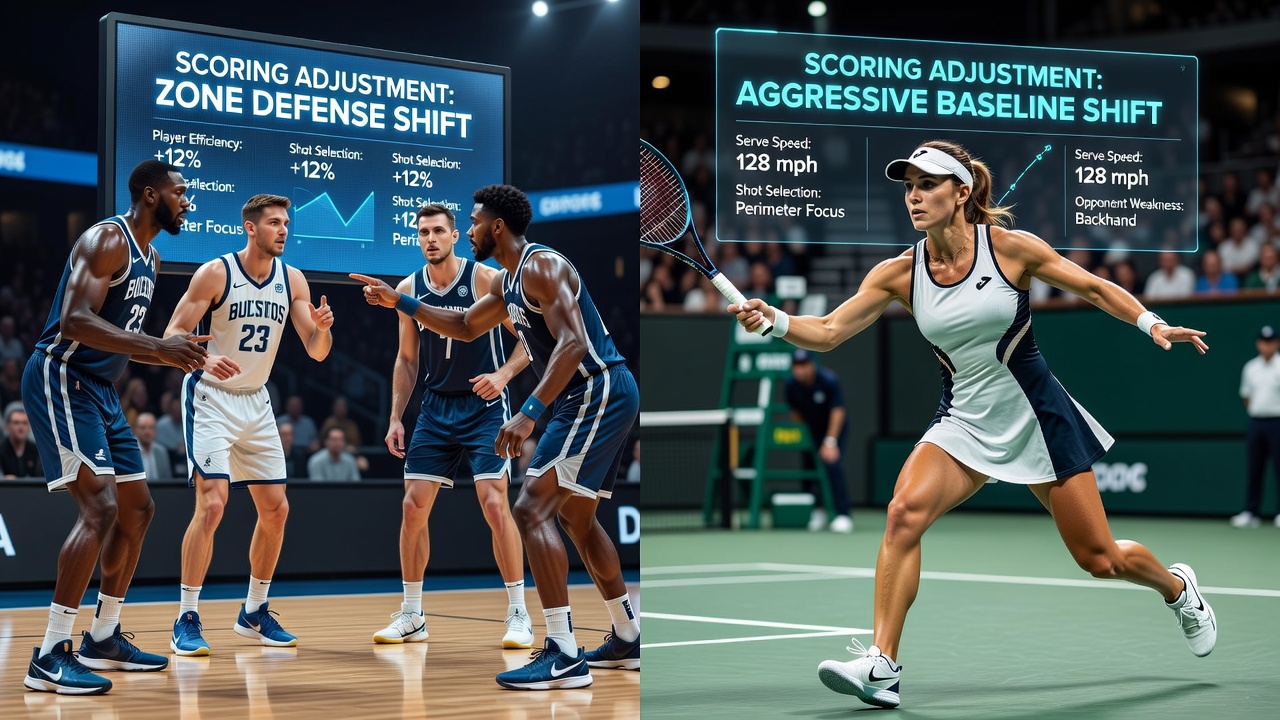
Comparative analysis across both sports reveals that circuits with more frequent scoring tweaks experience faster tactical convergence, as seen when basketball teams mirrored tennis players in emphasizing pre-planned set pieces after rule clarifications. In basketball, the emphasis moved to corner spacing and weak-side rotations; in tennis, equivalent adjustments appeared in return positioning and second-serve aggression under modified tiebreak conditions. Figures from international governing bodies reveal that athletes who train across multiple formats, such as those transitioning between individual and team events, accelerate these adaptations through transferable decision-making frameworks.
What's notable is how data collection tools now capture these evolutions in real time, allowing analysts to quantify how a single scoring change cascades into lineup decisions or match strategy. During periods leading into major events scheduled for August 2026, both circuits continue to monitor these metrics for further refinements.
Long-Term Effects on Player Development
Youth academies and development programs in both sports have incorporated scoring-adjustment simulations into training modules, producing athletes who enter professional circuits already attuned to spacing requirements and rally endurance demands. In basketball this manifests as earlier adoption of perimeter skills among prospects, while tennis programs emphasize multi-surface adaptability to handle variable tiebreak lengths. Evidence from performance databases shows that players exposed to these preparatory methods post higher win rates in their debut professional seasons compared with earlier cohorts.
Industry reports from regional federations document how these pipelines now include cross-training elements that align footwork mechanics and decision trees between the two sports, though direct transfer remains limited by surface and equipment differences. The result appears in measurable improvements in efficiency ratings tracked by both league and tour analytics departments.
Conclusion
Scoring adjustments continue to reshape tactical frameworks in professional basketball and tennis through documented shifts in spacing, shot selection, and match pacing, with governing bodies tracking outcomes via standardized data collection. The patterns established across recent rule cycles provide clear reference points for ongoing strategy development in both circuits.