The overlooked biomechanics behind record-setting throws and swings in modern field events
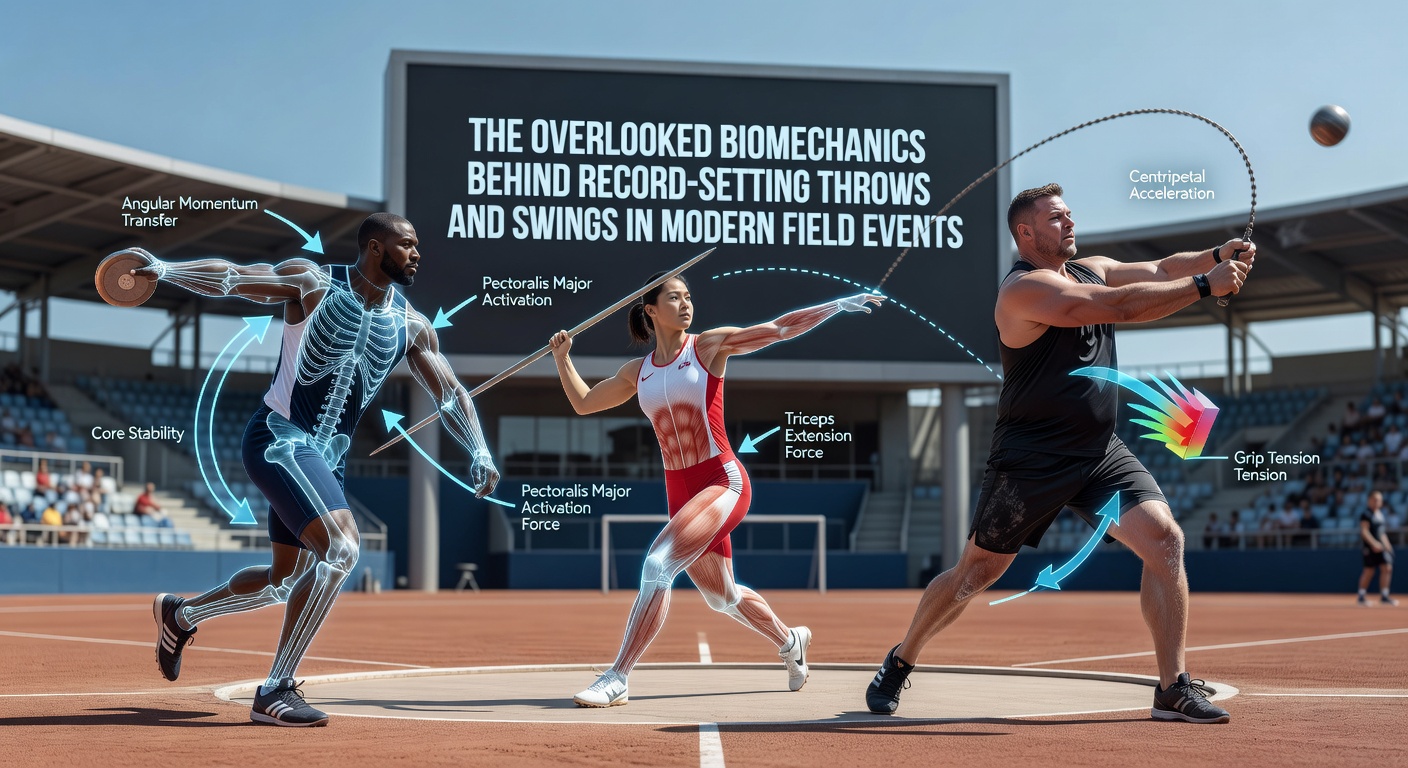
Record-setting performances in field events like the discus, hammer throw, and shot put depend on intricate biomechanical sequences that coordinate muscle activation, joint angles, and force transfer across the body. Researchers have mapped these patterns through motion capture studies and force plate data, revealing how athletes generate and direct power during the wind-up, delivery, and release phases. Data from competitive meets shows that small adjustments in hip-shoulder separation or foot placement can add several meters to throw distances without requiring increased raw strength.
Kinetic chain mechanics in rotational throws
Athletes build momentum through a linked series of body segments that starts at the ground and moves upward through the legs, core, and arms. In events involving swings and rotations such as the hammer throw, the athlete maintains a wide stance while the implement traces a circular path, allowing angular momentum to accumulate before the final pull. Studies conducted at sports science centers indicate that optimal ground reaction forces peak during the double-support phase, when both feet contact the circle and transfer energy into the torso twist. Observers note that elite performers time their pelvic rotation to lag slightly behind the shoulders, creating stored elastic energy in the midsection that releases explosively at release.
Those analyzing video footage of top throws often highlight the role of the non-throwing arm in counterbalancing the implement's mass. This arm extends outward during the early turns to stabilize the axis of rotation, then tucks inward to accelerate the final spin. Force measurements collected during training sessions demonstrate that athletes who maintain consistent radius throughout the swing achieve higher release velocities, because deviations in arm position dissipate angular momentum. In May 2026, several national teams are scheduled to incorporate real-time sensor feedback during preparatory camps, allowing coaches to adjust these radii on the fly.
Ground interaction and torque generation
Effective throws begin with precise footwork that converts linear momentum into rotational force. Shot putters, for instance, shift weight from the rear leg to the front plant foot while keeping the hips low, which maximizes the horizontal component of the ground reaction vector. Biomechanical models developed by university research groups show that the angle of this vector relative to the throwing direction directly influences how much torque reaches the implement. When the front foot lands too early or too late, the chain breaks and potential distance decreases.
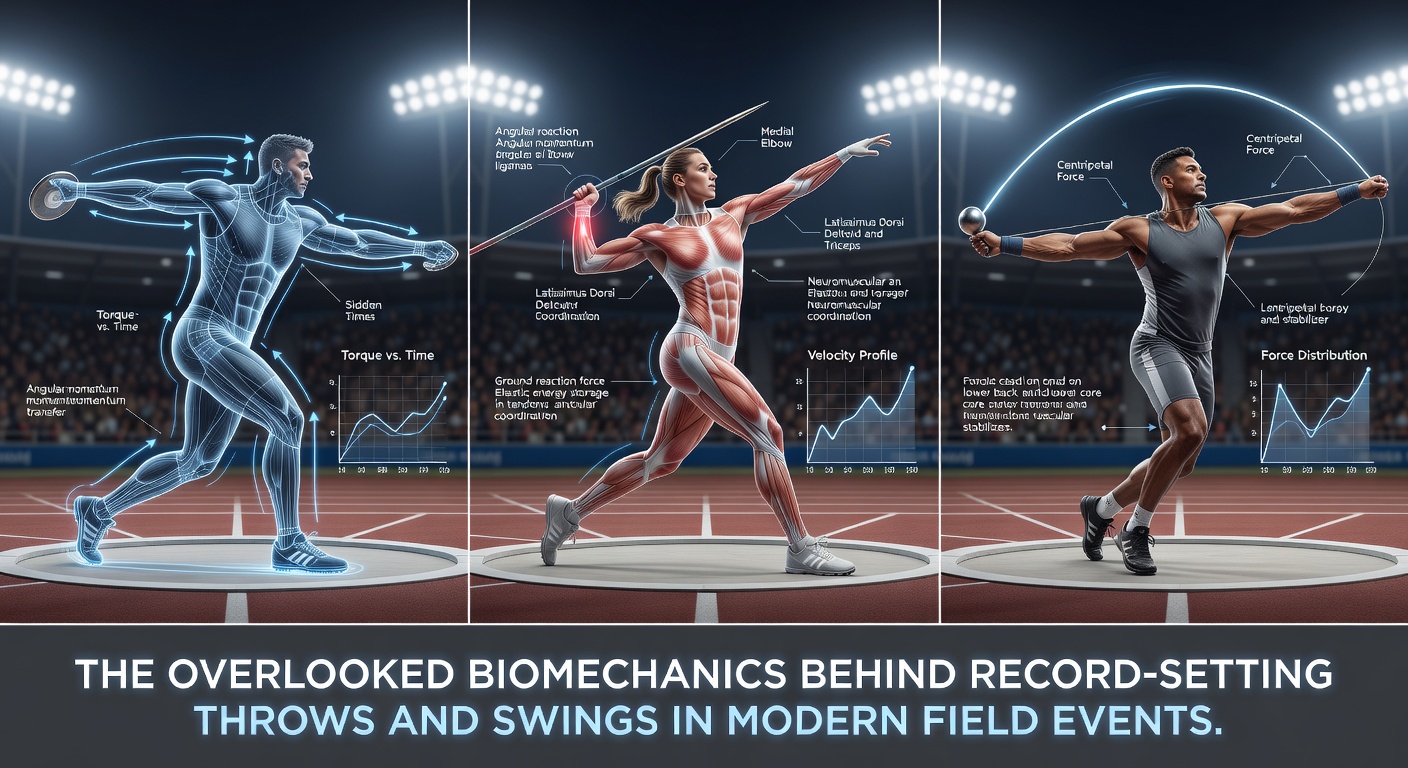
Discus athletes face an added challenge because the implement rests on the fingers rather than being gripped, so any wrist deviation at release alters the flight path. Research from European athletics institutes has quantified how a 5-degree change in release angle can alter distance by up to two meters under identical release speeds. Athletes therefore train to keep the hand flat through the final arm whip while the legs drive upward, creating the characteristic lift seen in record throws. Those who study these motions emphasize that the sequence must remain continuous; pauses between leg drive and arm extension reduce overall impulse.
Equipment and technique interplay
Modern implements carry design features that interact with biomechanical variables. Hammer wires and grips have evolved to allow smoother hand transitions during multiple turns, while shot put implements feature textured surfaces that improve finger friction at release. According to reports from the World Athletics technical commission, these incremental changes have contributed to gradual distance improvements alongside advances in training methods. Athletes who adapt their grip pressure and release timing to new equipment specifications often see immediate gains, because the interface between hand and implement transmits force more efficiently.
Video analysis tools used by national federations allow frame-by-frame comparison of technique across competitions. One study tracking athletes over multiple seasons found that those who increased their hip-shoulder separation angle by an average of eight degrees during the power position achieved measurable distance increases. The same data set revealed that foot placement angles relative to the throwing direction correlate strongly with consistent release heights, another critical variable for maximizing flight time.
Emerging measurement technologies
Wearable inertial sensors and high-speed cameras now capture biomechanical details that earlier generations of coaches could only estimate. Teams prepare for the 2026 outdoor season by reviewing aggregated data sets that compare release velocities, trunk lean angles, and center-of-mass trajectories across hundreds of throws. These comparisons help identify patterns common to record performances without prescribing any single ideal form, since body proportions vary widely among competitors.
Coaches integrate this information into periodized training plans that alternate between strength emphasis and technique refinement. During the indoor winter months preceding May competitions, athletes often focus on drills that isolate specific segments of the kinetic chain, such as medicine-ball rotational throws or single-leg balance holds. The goal remains consistent force application rather than isolated power development, because the chain functions only when each link activates in sequence.
Conclusion
Biomechanical analysis continues to illuminate why certain athletes set records while others plateau, yet the core principles remain rooted in coordinated force transfer, angular momentum management, and precise timing. As measurement tools grow more accessible, more competitors gain the ability to refine these overlooked details in their own training environments. The records achieved in coming seasons will likely reflect continued integration of this knowledge with traditional strength and conditioning approaches.