Tracing the Impact of Rule Modifications on Goal-Scoring Patterns in Major European Football Competitions
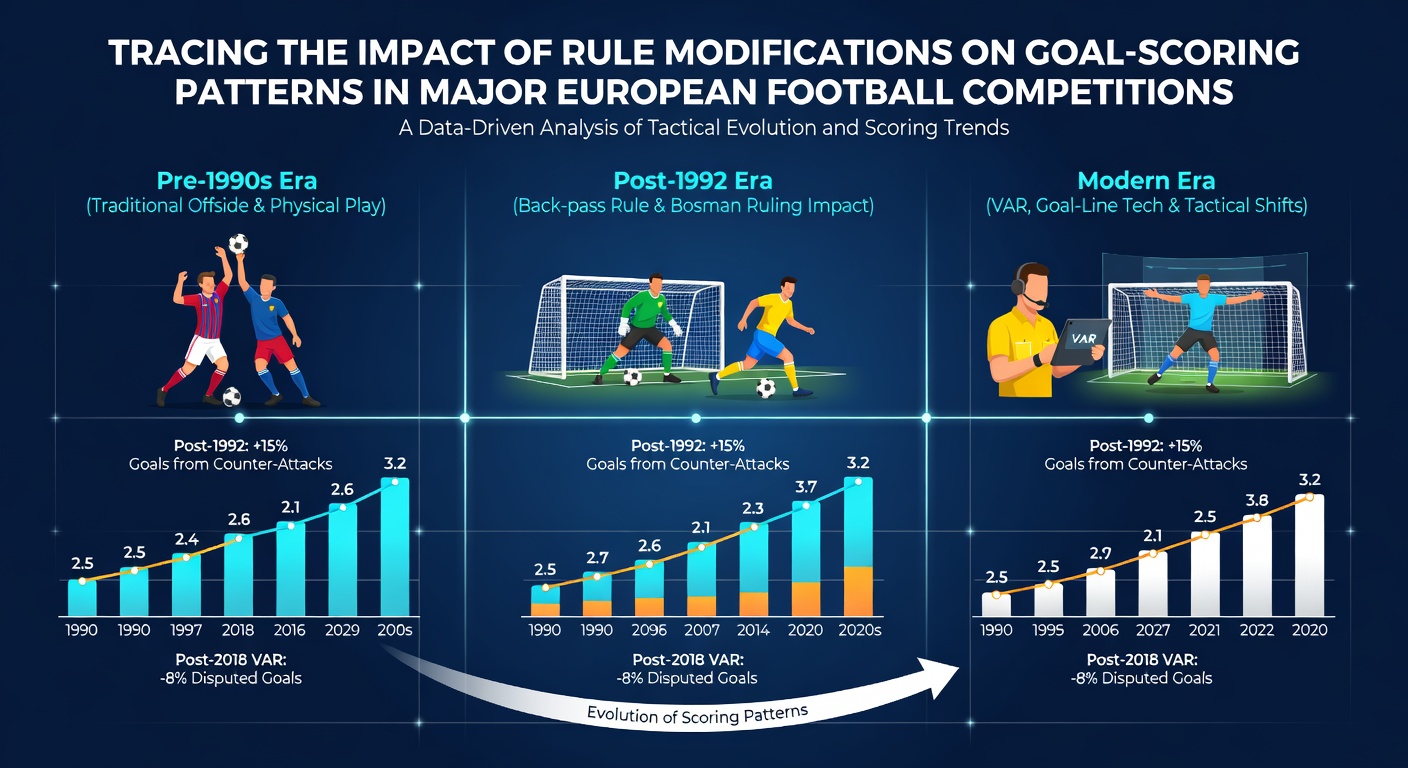
European football has seen a series of rule modifications over recent decades that directly altered how matches unfold and how many goals teams produce in competitions such as the Premier League, La Liga, Bundesliga, Serie A, and the UEFA Champions League. These adjustments range from the back-pass restriction introduced in 1992 to more recent implementations like semi-automated offside technology and expanded substitution rules during the 2020s and observers note that each change shifted tactical approaches while reshaping goal-scoring statistics in measurable ways. Data compiled across seasons reveals consistent patterns where certain modifications increased open play opportunities whereas others initially suppressed scoring before teams adapted.
Early Rule Shifts and Their Lasting Effects
The back-pass law of 1992 stands as one of the most significant early interventions because it prevented goalkeepers from handling passes from teammates and this forced quicker distribution plus more aggressive pressing from forwards. Before the change average goals per game in top European leagues hovered around 2.2 yet figures climbed steadily afterward reaching peaks near 2.8 in several campaigns during the late 1990s and early 2000s. Researchers at the University of Barcelona tracked these trends through match data and found that midfielders began taking more risks with forward passes while defenders adjusted positioning to avoid turnovers in dangerous areas. Similar dynamics appeared in the Champions League where knockout ties often featured higher scoring outputs once teams internalized the new demands.
Introduction of Video Technology and Subsequent Adjustments
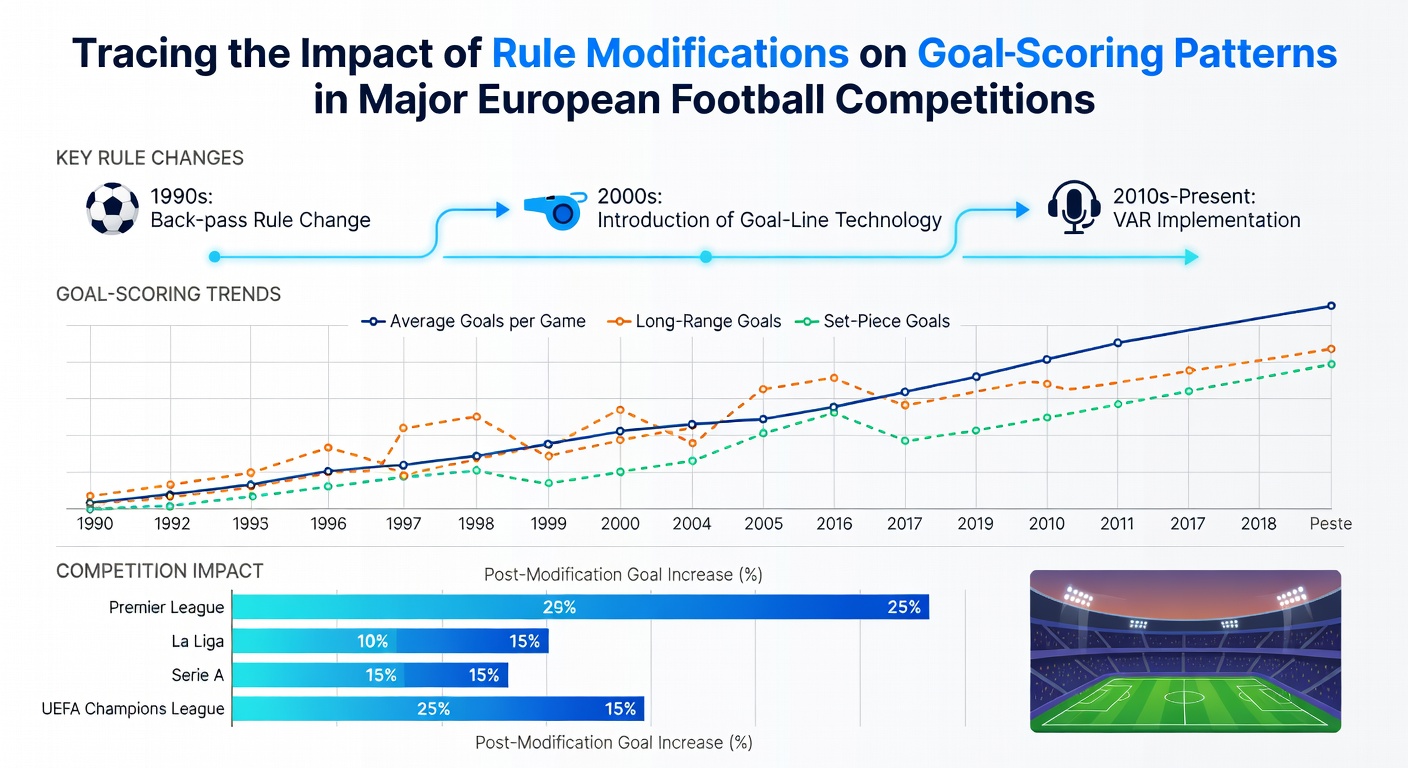
Video assistant referee systems rolled out progressively starting with the 2018-2019 season in major leagues and this addition brought stricter enforcement of offside, handball, and foul decisions that previously escaped notice. Initial data indicated a temporary dip in goals because marginal calls disrupted attacking momentum and increased stoppages yet by the 2022-2023 campaigns scoring rates stabilized or even rose in leagues that paired VAR with clearer handball guidelines. The Bundesliga recorded an average of 3.4 goals per match during the 2024-2025 season according to official competition archives while Serie A maintained lower outputs near 2.9 reflecting differing interpretations of physical play. Teams that emphasized set-piece routines gained advantages since VAR reviews sometimes overturned earlier disallowed goals and allowed more restarts to stand.
Recent Modifications Approaching 2026
Expanded substitution allowances introduced during the pandemic period continued into subsequent seasons with five changes permitted per match and this flexibility influenced late-game patterns because coaches could refresh attacking lines without sacrificing defensive structure. In May 2026 ongoing campaigns across Europe show continued emphasis on high-tempo pressing that capitalizes on fresher legs and data from UEFA technical reports highlights how these rules contributed to sustained goal tallies in the Champions League group stages. Additional tweaks such as stricter time-wasting sanctions and refined offside interpretations through semi-automated systems have reduced lengthy delays while encouraging fluid transitions. Leagues in Germany and Spain adopted these measures uniformly and match statistics reveal that counter-attacking opportunities increased by measurable margins compared to pre-2020 benchmarks.
Analysts examining patterns note that Bundesliga matches maintain the highest average goals per game among Europe's top divisions because the league's emphasis on direct play combines effectively with rule frameworks that reward quick restarts. Meanwhile the Premier League and La Liga display more balanced outputs where possession-oriented styles adapt to VAR scrutiny by focusing on controlled build-up rather than speculative long balls. Historical comparisons demonstrate that rule changes rarely produce uniform effects across all competitions since cultural and stylistic differences within each league mediate outcomes.
Conclusion
Rule modifications in European football continue to shape goal-scoring trends through direct influences on tactics, player behavior, and match flow with evidence from decades of data underscoring both immediate disruptions and longer-term adaptations. As competitions progress into the 2026 season observers track how further refinements will interact with evolving team strategies while maintaining competitive balance across major leagues and tournaments.