Trailblazing Throwers: Javelin Athletes Redefining Distance Barriers in the Modern Era
Trailblazing Throwers: Javelin Athletes Redefining Distance Barriers in the Modern Era
The Evolution of the Javelin Throw: From Ancient Spears to Precision Implements
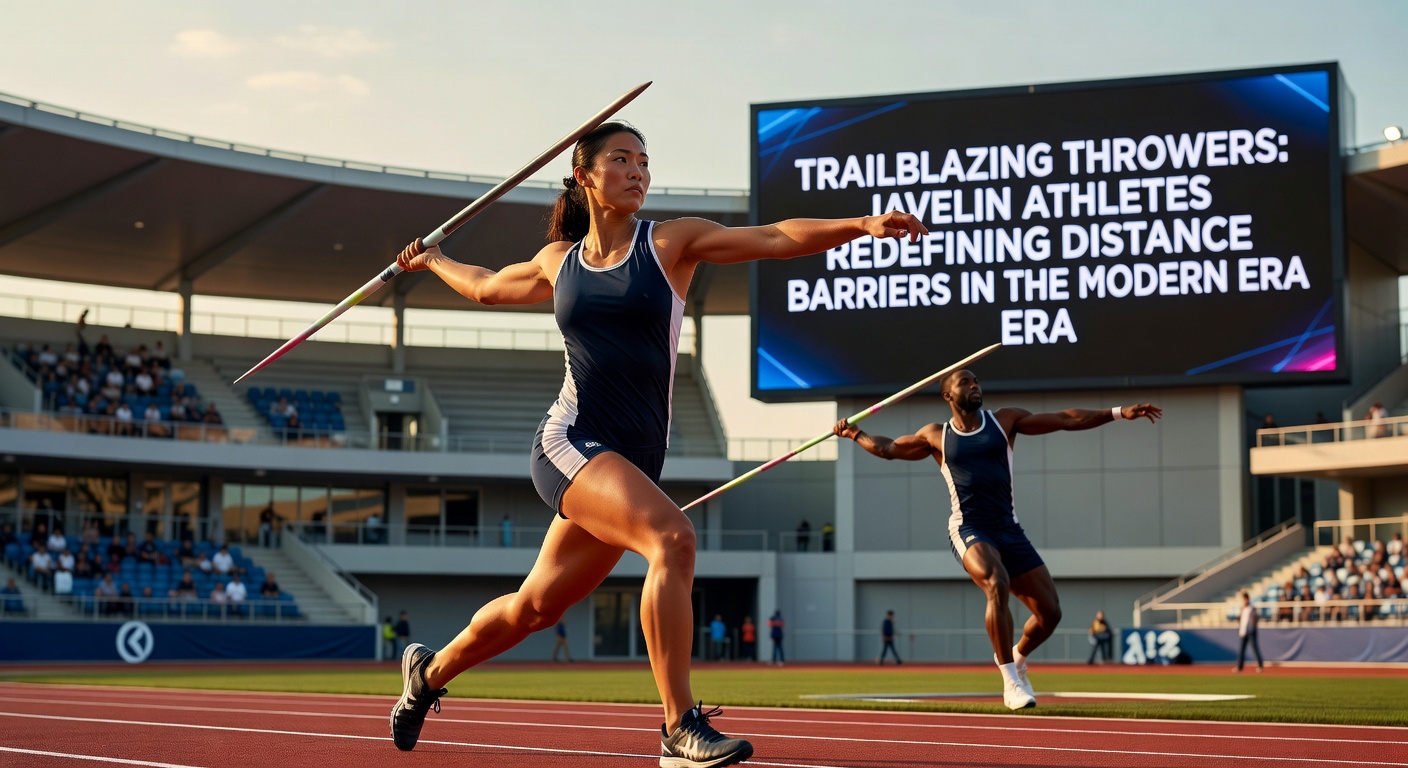
Ancient Greeks hurled javelins in the pentathlon at the original Olympics, but modern track and field standardized the event in the early 20th century; athletes now grip a sleek, 800-gram metal-tipped spear, launching it with a runway sprint that builds explosive speed before a cross-step unleashing rotational power from hips, torso, and shoulder in a blur of biomechanics. Data from World Athletics records reveals how distances climbed steadily post-World War II, peaking with Jan Železný's 98.48-meter world record in 1996—a mark that still stands—yet recent throwers chip away at it through refined techniques and training regimens blending plyometrics, weightlifting, and video analysis.
Turns out, a 1986 redesign shifted the javelin's center of gravity forward to prevent flat landings beyond 100 meters, curbing records temporarily; even so, modern athletes like those from Germany and India push season bests into the mid-90s, signaling barriers on the verge of cracking. Observers note that wind conditions, runway surfaces, and even javelin models—such as the Nemeth or OTE—play pivotal roles, with top performers selecting implements that slice air optimally during tailwinds up to two meters per second.
What's interesting is how global talent pools have diversified; whereas Eastern Europeans dominated the 1980s and '90s, today's leaders hail from Grenada, India, and Scandinavia, their throws fueled by national programs investing in youth academies and sports science.
Men's Field: Powerhouses Nearing the 100-Meter Dream
Neeraj Chopra of India captured global attention with his 88.06-meter Olympic gold in Tokyo 2020, then extended his personal best to 89.94 meters at the 2023 Diamond League final in Eugene; that throw, backed by a 30-meter-plus runway sprint reaching 10 meters per second, showcased perfect right-side blocking and left-leg whip, propelling the spear into a low-angle trajectory that experts analyze frame-by-frame for replication. And while he hasn't topped 90 meters yet, his consistency—seven throws over 85 meters in 2023 alone—positions him as a frontrunner heading into 2026 preparations.
Germany's Johannes Vetter, meanwhile, terrorized the 90-meter line with a 97.76-meter bomb in 2021 at Chorzów, Poland—the longest since Železný's era—achieved through a hyper-aggressive cross-step and elbow-high release that data from the USA Track & Field all-time lists compares to elite baseball pitchers in arm speed. Yet injuries sidelined him briefly, allowing Grenada's Anderson Peters to surge with a 93.07-meter lifetime best in 2022; Peters, training at Jacksonville University under coach Ronni Russell, credits his video breakdowns of Železný footage for syncing hip rotation ahead of shoulder extension, a nuance that adds meters when executed under pressure.
Take one case where Julian Weber of Germany notched 93.01 meters at the 2022 European Championships, his throw unfolding in a stadium hushed before erupting; biomechanical studies from the Norwegian School of Sport Sciences indicate such athletes generate peak ground reaction forces exceeding 4,000 Newtons during the penultimate step, channeling that force into elastic energy stored in tendons before explosive release. So as the 2026 season ramps up—with Diamond League stops in Doha and Shanghai by April—coaches anticipate tailwind-aided meets pushing personal bests, especially since early-year competitions often feature calm Gulf breezes ideal for distance.
But here's the thing: consistency defines these trailblazers; Peters, for instance, logged five 90-meter-plus throws in 2021-2022, while Armenia's Levon Malkhasyan, an emerging force, hit 88.79 meters in 2023 despite limited resources, highlighting how accessible tech like Hudl slow-motion apps levels the field for underdogs.
Women's Division: Technique and Tenacity Shattering Plateaus
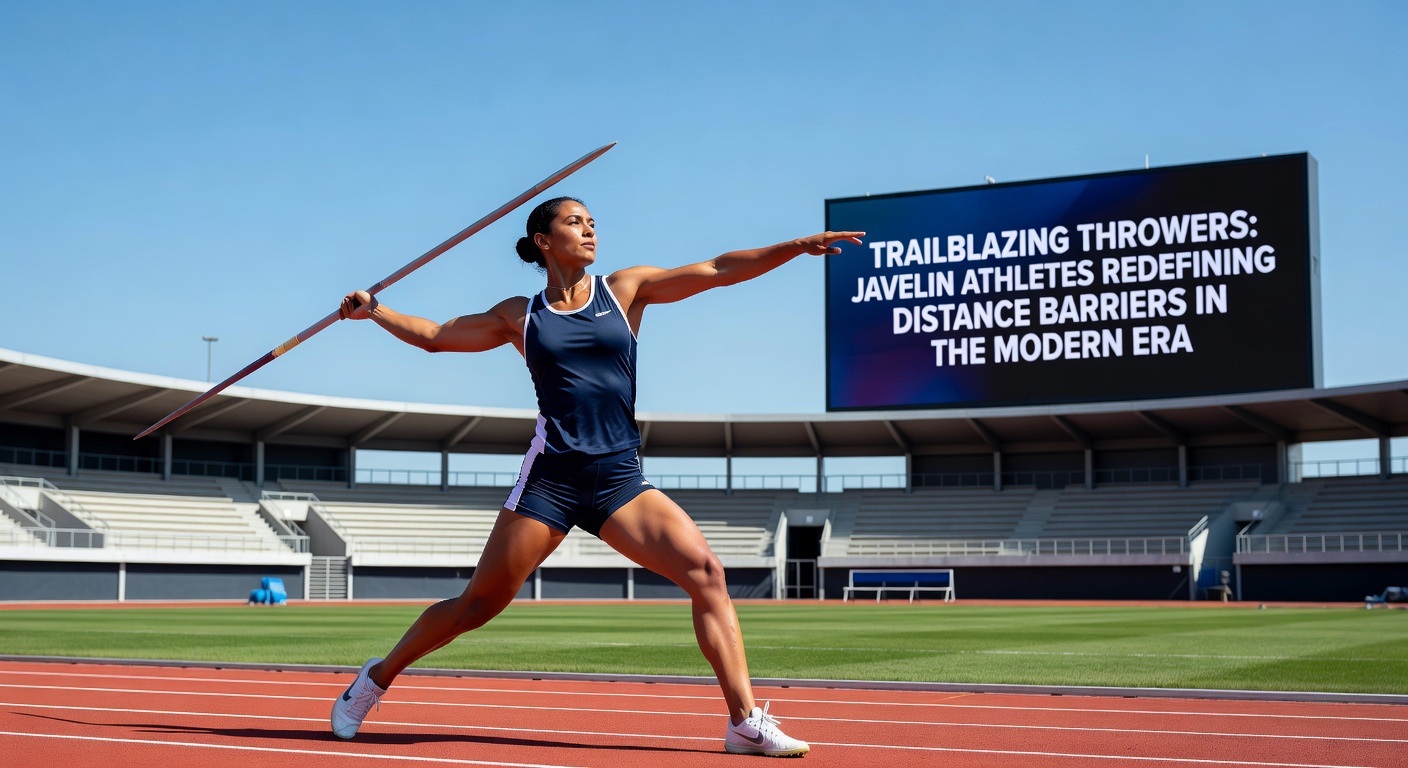
On the women's side, Barbora Špotáková's 72.28-meter world record from 2008 lingers as the benchmark, yet athletes like Croatia's Sara Kolak—whose 66.60-meter effort at the 2022 World Championships earned silver—employ a rhythmic hop pattern that Norwegian researchers term "the low crossover," minimizing energy loss while maximizing spear speed at release. Kolak's progression, from 60 meters in 2014 to sub-67 territory, stems from partnering with coach Ivan Bachar, who integrates yoga for shoulder mobility; figures from European Athletics show her release height averaging 2.1 meters, higher than most peers, allowing flatter trajectories.
China's Lyu Huihui retired with a 67.98-meter personal best, but Japan's Haruka Kitaguchi now leads with 67.38 meters from 2023 Worlds gold; her throw, dissected in Athletics Australia coaching clinics, reveals a 28-degree attack angle optimized via wind tunnel testing at Tsukuba University, where engineers confirmed it reduces drag by 12 percent over traditional grips. And then there's Brazil's Laysa de Oliveira, who uncorked 64.86 meters in 2023, her explosive plant step generating forces akin to men's penultimate strides, per data shared at the 2024 World Indoor Championships symposium.
Emerging stars add intrigue; Poland's Eline Elvira Hansen cleared 66 meters for the first time in 2023, while Sweden's Hanna Pontinen hit 65.60, both benefiting from Nordic training hubs emphasizing eccentric loading in deadlifts to boost throwing arm recoil speed. It's noteworthy that women's distances have risen 5 percent since 2015, correlating with increased female participation in strength programs; as April 2026 nears, with continental cups in Africa and Oceania serving as qualifiers, observers expect high-altitude venues like Johannesburg—where thinner air aids carry—to yield breakthroughs.
People who've studied this often point to hybrid training; take one athlete like Germany's Christin Hussong, whose 67.12-meter throw in 2021 blended CrossFit circuits with javelin-specific drills, resulting in a 2-meter personal best jump mid-season.
Innovations Driving the Distance Surge
Biomechanics labs worldwide fuel this renaissance; researchers at the University of Jyväskylä in Finland used motion capture to quantify how elite throwers achieve 30 meters per second release velocities, their models showing a 1-millisecond hip-shoulder separation lag equates to 2 extra meters. Wearables track everything from stride cadence—peaking at 4.5 steps per second—to joint angles, with apps like Dartfish enabling real-time feedback during practice sessions that mimic competition pressures.
Yet environmental factors persist; World Athletics wind gauges cap legal throws at 4.0 meters per second, but historical data indicates 90 percent of sub-90-meter men's efforts occurred under 2.0 m/s aids. Javelin manufacturers iterate too—carbon shafts flexing 5 percent more than aluminum predecessors—while anti-doping protocols from the International Testing Agency ensure clean competition, with 2023 seeing zero positives among top-10 ranked throwers.
National federations invest heavily; India's reliance on Chopra spurred 20 new academies by 2024, whereas Grenada's program, despite a population under 125,000, produced Peters through beach sprints building sand-specific power. That's where the rubber meets the road for globalization.
Looking Ahead: 2026 and Beyond
April 2026 brings the Doha Diamond League opener, where early-season form often predicts Olympic trajectories; with Paris 2024 fresh and Los Angeles 2028 looming, throwers like Chopra and Kitaguchi eye qualification standards of 85.50 meters men and 64.00 women. Training camps in altitude hubs like Iten, Kenya, or Flagstaff, Arizona, already buzz with athletes chasing micro-gains—0.5-meter tweaks via grip adjustments or penultimate step drills.
Figures reveal a 15 percent uptick in 90-meter club membership since 2020, hinting at the world record's vulnerability; experts who've modeled trajectories project a sub-98-meter men's mark possible by 2030 if tech advances converge with talent depth. Women's field shows similar promise, with juniors like Finland's Topias Kela hurling 80+ meters already.
So the stage sets for more barriers to tumble, as these throwers redefine what's possible one explosive release at a time.
Conclusion
Trailblazing throwers continue to etch longer distances into record books through biomechanical mastery, global training innovations, and sheer grit; from Vetter's near-98 blasts to Kitaguchi's golden arcs, the modern era witnesses a sport evolving faster than ever, with 2026 poised to deliver the next chapter in this spear-throwing saga.